
 By Admin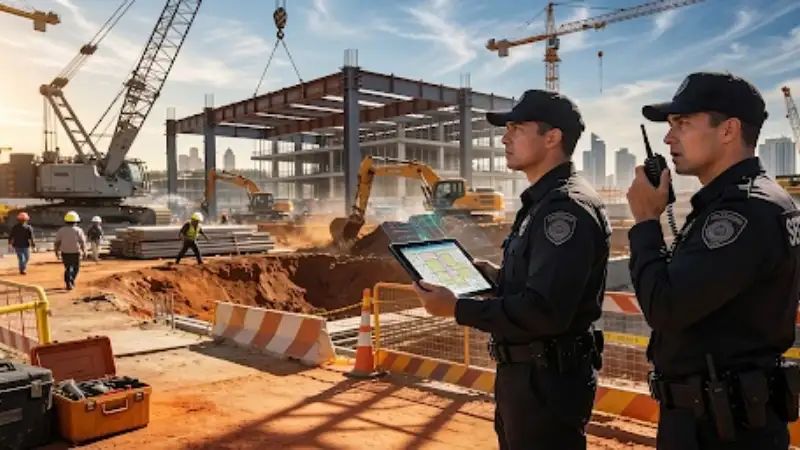
For more information, visit our website.
Contractors think about security in phases without always naming it that way. A job site under construction has one set of risks — tool theft, copper wire stripped from unfinished walls, trespassers on an unlit lot at night. The same building six months later, occupied and operating, has an entirely different risk profile. The problem is that security planning often stops at the punch list, leaving the building owner to figure out occupied-building security from scratch instead of building on infrastructure that could have been planned in from the start.
The Job Site Phase: Protecting an Asset That Isn’t Finished Yet
Materials theft and vandalism cost the construction industry billions annually, and most of it is preventable with basic deterrence rather than expensive systems. A job site doesn’t need enterprise-grade security — it needs visible cameras, adequate lighting, and a documented process for who has site access and when.
Temporary, battery- or solar-powered camera towers have become standard on mid-size and larger sites specifically because they don’t require permanent electrical infrastructure and can move with the project schedule. Combined with a fenced perimeter and clear signage, they address the bulk of opportunistic theft without a major investment. Where sites run into trouble is usually a gap between phases — materials delivered ahead of when they’re needed, sitting unsecured for days before installation, or a subcontractor’s equipment left overnight without anyone specifically responsible for securing it.
The Handoff Point Most Projects Get Wrong
The transition from active construction to occupied building is where security planning tends to fall through the cracks. The general contractor’s job-site security measures come down as the project wraps up, and the building owner or property manager is left starting a permanent security plan from zero — often well after occupancy has already begun, which means the building runs exposed during exactly the period when it’s holding real inventory, equipment, or people for the first time.
A better approach treats the transition as a planned handoff rather than a gap. That means specifying conduit runs, camera mounting points, and access control wiring during the electrical rough-in phase — even if the permanent security equipment isn’t installed until closer to occupancy — so the building doesn’t need walls opened up again to retrofit security infrastructure after drywall and finishes are complete.
What to Build Into the Electrical Plan Early
A short list of items, addressed at the rough-in stage, saves substantial retrofit cost later:
- Conduit runs to planned camera locations, sized for future cable upgrades, not just current specs
- Low-voltage wiring to door frames anticipated for card readers or electrified locks
- Dedicated circuits for security panels, separate from general building power where possible
- Network drops positioned near where an NVR or security panel will eventually sit
None of this commits an owner to a specific security vendor or system. It simply avoids the far more expensive alternative of cutting into finished walls to run cable after the building is occupied.
Commercial Security Once the Building Is Live
Once occupancy begins, the security conversation shifts from theft deterrence to a broader set of concerns: controlling who has access to which areas, monitoring after-hours activity, and integrating alarm response with whatever monitoring service the business chooses to use. This is typically the point where a business owner or property manager starts evaluating options for commercial security in San Antonio contractors and vendors, comparing monitored alarm systems, access control platforms, and camera coverage against the building’s actual layout and risk profile rather than a generic package.
Getting quotes and evaluating vendors earlier in the construction timeline — even if installation happens closer to occupancy — gives the electrical contractor accurate specifications to build toward, rather than guessing at conduit placement and hoping it matches whatever system gets chosen months later.
Budget Conversations Worth Having With the Owner
Contractors are in a good position to flag security infrastructure as a line item during early budget conversations, even when the owner hasn’t thought that far ahead yet. Framing it around avoided retrofit cost tends to land better than framing it as an upsell: running conduit during rough-in costs a fraction of what it costs to open a finished wall eighteen months later. That argument is straightforward enough that most owners, once they hear it, want it included rather than deferred.
Insurance and Liability Considerations
Security infrastructure decisions made during construction have downstream effects on insurance premiums and liability exposure that rarely make it into the initial project conversation. Commercial property insurers increasingly ask about monitored alarm coverage, camera retention periods, and access control logging when underwriting a policy, and buildings that can demonstrate a documented security plan sometimes qualify for better rates. Bringing this up during design development — rather than leaving the owner to discover it when their insurance broker asks — is a small addition to the project conversation that can meaningfully affect the building’s operating costs down the line.
Subcontractor Coordination
Security infrastructure touches more trades than owners typically expect. Electricians need accurate locations for camera and panel power, low-voltage contractors need conduit paths coordinated before drywall, and door hardware suppliers need lock specifications finalized before frames are ordered. A single point of coordination — often the general contractor or a designated project manager — keeping these trades aligned on the security plan prevents the common scenario where a low-voltage contractor shows up to run camera cable only to find the conduit path was never roughed in because nobody flagged it as their responsibility.
A Timeline Worth Following
A reasonable sequence looks like: address job-site security needs at project kickoff, build passive infrastructure — conduit, wiring, mounting points — into the rough-in phase regardless of which vendor eventually gets selected, and open the occupied-building security conversation with the owner well before final walkthrough rather than after keys change hands. Projects that follow something close to this sequence tend to hand over buildings that are ready for security equipment on day one of occupancy, instead of leaving owners to discover the gap themselves a few weeks into running the business. Even a single coordination meeting early in the schedule, walking through the security plan trade by trade, tends to prevent most of the rework that shows up later as change orders.